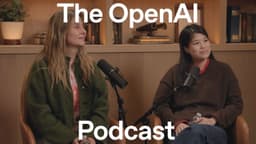
Shaping Model Behavior in GPT-5.1
What does it mean for an AI model to have "personality"? Researcher Christina Kim and product manager Laurentia Romaniuk talk about how OpenAI set out to build a model that delivers on both IQ and EQ, while giving people more flexibility in how ChatGPT responds. They break down what goes into model behavior and why it's an important, but still imperfect blend of art and science.
🎯What are the main goals behind OpenAI's GPT-5.1 release?
Core Development Objectives
Primary Goals:
- Address GPT-5 Feedback - Respond to community concerns about model behavior and user experience
- Universal Reasoning Models - Make all ChatGPT models reasoning-enabled for the first time ever
- Enhanced Intelligence - Deliver smarter models with improved instruction following across all use cases
Revolutionary Reasoning Capability:
- Adaptive Thinking: Model decides when and how much to think based on prompt complexity
- Smart Resource Allocation: Simple greetings get instant responses, complex questions trigger deeper reasoning
- Chain of Thought Processing: Model refines answers and works through problems before responding
- System 1 vs System 2: Implements Daniel Kahneman's dual-process thinking framework
Broad Performance Improvements:
- Instruction Following: Significant enhancement in following user commands and custom instructions
- Intelligence Boost: Reasoning capability improves performance across all evaluation metrics
- Use Case Expansion: Benefits extend to scenarios users might not expect to require reasoning
🔄How does OpenAI's model switcher work in ChatGPT?
Multi-Model System Architecture
Switcher Functionality:
- Automatic Model Selection: System intelligently routes users between chat and reasoning models
- Context-Aware Switching: Analyzes user needs and query complexity to determine optimal model
- Evaluation-Based Routing: Uses performance metrics to forecast which model best serves specific prompts
Model Differentiation:
- Reasoning Models - For scientifically accurate, detailed responses requiring deep analysis
- Chat Models - For conversational interactions and general queries
- Specialized Tools - Different models backing various features and capabilities
User Experience Considerations:
- Capability Matching: Different models excel at different tasks and use cases
- UI Guidance: Product interfaces help users select appropriate models
- Seamless Transitions: Switcher learns user preferences and context over time
Technical Reality:
- System of Models: GPT-5.1 isn't a single model but a coordinated system
- Multiple Components: Reasoning model, lighter reasoning model, auto switcher, and specialized tools
- Model-Backed Tools: Various features powered by different underlying models
❄️ Why did users find GPT-5 cold and how did OpenAI fix it?
User Feedback Analysis
Core Problems Identified:
- Weaker Intuition - Model responses felt less natural and understanding
- Reduced Warmth - Interactions seemed more clinical and less empathetic
- Memory Issues - Context window wasn't carrying forward important user information
- Jarring Transitions - Auto switcher created inconsistent response styles
Specific User Experience Issues:
- Context Loss: Model forgetting important personal information like "I'm having a really bad day" after 10 turns
- Clinical Responses: Switching to reasoning mode during emotional conversations (e.g., cancer diagnosis) resulted in cold, clinical answers
- Inconsistent Personality: Different models in the switcher had varying response styles
OpenAI's Solutions:
Memory Enhancement:
- Extended Context Window: Improved information retention across longer conversations
- Better Context Carrying: Enhanced ability to remember important user details
Custom Instructions Improvement:
- Enhanced Feature: Better consistency in following user-defined preferences
- Forward Context: Improved ability to maintain instructions throughout conversations
- User Control: Allowing users to correct unwanted behaviors with lasting effect
Personality Customization:
- Style and Trait Features: New personality controls for users
- Response Format Guidance: Users can direct how ChatGPT responds
- Personal Preference Accommodation: Recognition that interaction style is highly individual
📊How does OpenAI process 800 million users' feedback effectively?
Feedback Analysis System
Conversation-Based Analysis:
- Direct Conversation Access: Ability to examine actual user conversations when feedback is provided
- Contextual Understanding: Seeing exactly what happened in problematic interactions
- Targeted Solutions: Using specific conversation examples to identify and fix issues
Systematic Approach:
- User Reports Issue - Feedback about weird, cold, or clipped responses
- Conversation Review - Examining the actual conversation link provided
- Root Cause Analysis - Identifying whether user was in experimental conditions
- Pattern Recognition - Understanding why specific experiments create edge cases for certain users
Experimental Insights:
- A/B Testing Context: Understanding which experimental conditions led to negative experiences
- Edge Case Identification: Recognizing when experiments work for most but fail for specific user types
- Iterative Improvement: Using conversation data to refine experimental approaches
💎 Summary from [0:00-7:59]
Essential Insights:
- Universal Reasoning Revolution - GPT-5.1 marks the first time all ChatGPT models are reasoning-enabled, allowing adaptive thinking based on query complexity
- User-Driven Improvements - OpenAI addressed community feedback about GPT-5 feeling cold and having weaker intuition through systematic fixes
- Multi-Model Architecture - ChatGPT now operates as a coordinated system of specialized models rather than a single monolithic system
Actionable Insights:
- Reasoning Benefits Everyone - Even simple interactions benefit from underlying reasoning capabilities that improve instruction following
- Customization is Key - New personality and style controls allow users to tailor ChatGPT's response format to their preferences
- Context Matters - Enhanced memory and custom instruction following ensure more consistent, personalized interactions
- Feedback Drives Innovation - OpenAI uses actual conversation data to identify and solve specific user experience problems
📚References from [0:00-7:59]
People Mentioned:
- Daniel Kahneman - Referenced for his dual-process thinking framework (System 1 vs System 2 thinking) that influenced GPT-5.1's reasoning approach
Companies & Products:
- OpenAI - The company developing GPT-5.1 and ChatGPT with focus on model behavior and reasoning capabilities
- ChatGPT - The conversational AI platform being enhanced with universal reasoning models and personality customization
Technologies & Tools:
- GPT-5.1 - The latest model release featuring universal reasoning capabilities and improved user experience
- Auto Switcher - OpenAI's system that intelligently routes users between different specialized models
- Custom Instructions - Feature allowing users to set persistent preferences for how ChatGPT responds
- Style and Trait Features - New personality controls that let users guide ChatGPT's response format
Concepts & Frameworks:
- Chain of Thought Processing - Method where the model works through problems step-by-step before providing answers
- System 1 vs System 2 Thinking - Kahneman's framework distinguishing between fast, intuitive thinking and slower, deliberate reasoning
- Model Behavior - The field focused on how AI systems interact with users and express personality
- Post Training - The research area focused on refining model behavior after initial training
🔄How does OpenAI's auto switcher decide between GPT-5.1 models?
Model Switching Intelligence
OpenAI's auto switcher uses multiple signals to determine when to move users from GPT-5.1 chat to GPT-5.1 reasoning mode:
Key Performance Metrics:
- Factuality Assessment - Evaluating response accuracy and reliability
- Latency Monitoring - Tracking response speed since not all users want to wait for better answers
- User Behavior Signals - Analyzing how well each response performs for individual users
The Balancing Act:
The system combines art and science to optimize the switching decision, weighing different factors to determine when the switch will be most effective for each user's specific needs and preferences.
🧠How does OpenAI measure emotional intelligence in AI models?
EQ vs IQ Evaluation Challenges
While IQ improvements can be measured through benchmarks and evaluations, measuring emotional intelligence (EQ) in AI models requires more sophisticated approaches:
User Signals Research:
- Reward Model Training - Using reinforcement learning signals from production user data
- Intent Understanding - Analyzing what users actually want from their interactions
- Context Awareness - Considering conversation history, user memory, and situational factors
Core EQ Components:
- Listening Ability - Processing and understanding user input effectively
- Memory Integration - Remembering and building on previous conversation elements
- Subtle Signal Detection - Picking up on nuanced user cues and preferences
- Contextual Response - Adapting responses based on conversation flow and user history
Technical Implementation:
- Context Window Optimization - Ensuring relevant information carries forward properly
- Memory Logging - Accurately storing and retrieving user interaction patterns
- Style Matching - Adapting communication style to resonate with individual users
🎭What does personality mean for AI models like ChatGPT?
Two Definitions of AI Personality
OpenAI defines AI personality in two distinct but interconnected ways:
1. Response Style Features:
- Trait-Based Characteristics - Conciseness vs. lengthy responses, emoji usage patterns
- Communication Patterns - Tone, formality level, and interaction style
- Behavioral Consistency - Maintaining specific response characteristics across conversations
2. Complete User Experience:
The broader personality encompasses the entire ChatGPT interaction:
Technical Components ("The Harness"):
- App Interface - Font choices, visual design, response speed
- Context Window Management - How conversation history is maintained
- Rate Limiting Effects - When users are switched to different models with varying capabilities
- Latency Patterns - How quickly or slowly the system responds
Integrated Experience:
- Multi-Modal Performance - Image generation, voice, and text quality working together
- Seamless Integration - How well different AI capabilities work as one unified system
- User Perception - The complete feeling users get from the entire interaction
The Challenge:
Users experience personality as one cohesive system, but it's actually an assembly of many technical components. The art lies in mapping user feedback about "personality" back to specific technical elements that can be improved.
⚖️ How difficult is it to shape AI personality during training?
The Art and Science of Post-Training
Shaping AI personality during post-training involves complex balancing acts across multiple dimensions:
Training Challenges:
- Multiple Capability Support - Ensuring the model maintains diverse functional abilities
- Reinforcement Learning Complexity - Making subtle reward configuration tweaks to hit specific targets
- Preservation vs. Change - Maintaining user-valued qualities like "warmth" while improving other aspects
The Balancing Framework:
- Capability Preservation - Not losing existing strengths while adding new features
- User Experience Consistency - Maintaining the qualities users appreciate
- Subtle Optimization - Making incremental improvements without breaking core functionality
Research Approach:
The process combines systematic research with artistic intuition, requiring constant evaluation of what users value most and how technical changes affect the overall experience.
🎯How does OpenAI balance user freedom with AI safety?
The Model Spec Philosophy
OpenAI's approach centers on "maximizing user freedom while minimizing harm," creating complex technical challenges:
The Freedom vs. Safety Dilemma:
- Maximum Flexibility - Users should be able to do almost anything with the models
- Steerability Preservation - Maintaining user ability to direct model behavior
- Quirk Removal Challenge - Eliminating unwanted model behaviors without breaking user control
Technical Example - The M-Dash Problem:
If OpenAI trained the model to never use M-dashes (a formatting quirk), users who specifically wanted M-dashes wouldn't be able to request them. The solution requires removing default quirks while preserving user ability to request specific behaviors.
Evolution from Early ChatGPT:
- Initial Over-Caution - Early versions refused almost everything to prevent misuse
- Learning Balance - Recognizing that the safest model (one that refuses everything) isn't actually useful
- Boundary Optimization - Finding the right limits for different types of model decisions
Current Approach - Safe Completions:
When users request something that crosses safety boundaries, the model now tries to fulfill the underlying intent without performing the harmful action, rather than simply refusing.
💎 Summary from [8:01-15:59]
Essential Insights:
- Multi-Signal Intelligence - OpenAI's auto switcher uses factuality, latency, and user behavior data to optimize model selection between GPT-5.1 variants
- EQ Measurement Innovation - Measuring emotional intelligence requires user signals research, reward model training, and deep context understanding beyond traditional benchmarks
- Dual Personality Definition - AI personality encompasses both specific response traits and the complete user experience including technical infrastructure
Actionable Insights:
- AI personality extends far beyond response style to include app design, latency, and integration quality
- Balancing user freedom with safety requires preserving steerability while removing unwanted default behaviors
- Post-training involves artistic intuition combined with systematic research to maintain valued qualities like "warmth"
📚References from [8:01-15:59]
People Mentioned:
- Christina Kim - OpenAI researcher working on user signals research and reward model training
- Laurentia Romaniuk - OpenAI product manager and co-author of the model spec document
Companies & Products:
- OpenAI - Developer of GPT-5.1 models and ChatGPT platform
- ChatGPT - AI assistant platform with integrated multi-modal capabilities
Technologies & Tools:
- GPT-5.1 Chat - Standard conversational AI model version
- GPT-5.1 Reasoning - Advanced reasoning-focused model variant
- Auto Switcher - System that automatically selects between different model versions
- Safe Completions - Safety system that attempts to fulfill user intent without harmful actions
Concepts & Frameworks:
- Model Spec - OpenAI's document outlining the principle of maximizing user freedom while minimizing harm
- User Signals Research - Research methodology using production data to train reward models
- The Harness - Term for the technical infrastructure surrounding AI models that affects user experience
- Steerability - The ability for users to direct and control AI model behavior
- Post-Training - Phase of AI development where models are fine-tuned after initial training
🏛️ How does OpenAI handle sensitive content like legal cases?
Balancing Safety with Professional Needs
OpenAI faces complex challenges when determining how ChatGPT should handle sensitive content, particularly in professional contexts where accuracy is critical.
The Legal Case Challenge:
- Real-world impact: A lawyer asked ChatGPT to proofread a sexual assault case
- Safety override: The model automatically scrubbed assault content due to violence/gore restrictions
- Professional consequence: The lawyer noted this would have "totally weakened my client's case" if submitted
The Library Principle:
Christina Kim, drawing from her librarian background, explains the philosophical approach:
- Information access: Libraries provide access to all human knowledge and ideas
- Contextual application: ChatGPT should follow the same principle with proper contextualization
- Nuanced handling: Different contexts require different responses (legal work vs. revenge emails)
Technical Evolution:
- Advancing capabilities: The technology continues improving to handle nuanced situations
- Ongoing development: There's always more work to do in balancing safety with utility
- Context awareness: Future models will better understand when sensitive content serves legitimate purposes
🎯How has OpenAI improved bias handling in GPT models?
Progress in Subjective Domain Management
OpenAI has made intentional efforts to improve how their models handle bias and subjective topics, with measurable progress documented in recent research.
Key Improvements:
- Uncertainty expression: Models can now better express when they're uncertain about subjective matters
- Open-ended responses: Enhanced ability to answer unknown questions without forcing definitive answers
- User-directed conversations: Models allow users to self-direct where conversations go
- Objective truth anchoring: While exploring subjective topics, models stay grounded in factual information
Recent Documentation:
- Published research: OpenAI released a blog post about bias reduction progress approximately 1-1.5 months prior
- Measurable metrics: The team actively monitors how models handle subjective domains
- Continuous monitoring: Ongoing evaluation ensures models can engage with diverse perspectives earnestly
Practical Applications:
- Balanced perspectives: Models can explore multiple viewpoints on controversial topics
- Contextual awareness: Better understanding of when to provide definitive vs. exploratory answers
- User empowerment: People can guide discussions toward their specific interests and needs
🎨What makes GPT-5.1's creativity capabilities special?
Enhanced Expressive Range and Artistic Capabilities
GPT-5.1 includes significant improvements in creative expression that represent a "sleeper feature" with much wider expressive capabilities than previous models.
Creative Enhancements:
- Expanded expressive range: The model can adapt its communication style much more dramatically
- Elevated communication: Can speak in sophisticated, highly elevated language when requested
- Simplified expression: Equally capable of very simple, accessible communication
- Style flexibility: Much more responsive to requests for specific writing styles and tones
The Art vs. Science Challenge:
Why creativity is complex:
- No ground truth: Unlike math problems with clear answers, creative tasks are subjective
- Context dependency: The "best" creative response depends heavily on user needs and situation
- Multiple valid approaches: Various creative solutions can all be equally valid
- User-specific preferences: What works for one person may not work for another
Research Team Focus:
- Dedicated researchers: Specific team members focus solely on model creativity
- Model behavior integration: Creativity improvements are built into the core model behavior system
- Continuous development: Ongoing work to expand creative capabilities across different domains
Practical Impact:
- Hidden potential: Many users may not notice the enhanced creativity without specifically requesting it
- Prompt responsiveness: The model is much better at adapting to creative direction
- Artistic applications: Significant improvements for writers, creators, and other artistic professionals
🎭Why does OpenAI believe one personality can't serve 800 million users?
The Case for Customizable AI Personalities
With over 800 million weekly active users, OpenAI recognizes that a single model personality cannot effectively serve such a diverse global audience.
Scale Challenge:
- Massive user base: Over 800 million weekly active users globally
- Diverse needs: Users span different cultures, professions, age groups, and communication preferences
- Individual preferences: People have vastly different ways they prefer to interact and receive information
- Context variety: Professional, educational, creative, and personal use cases require different approaches
Customization Strategy:
Current approach with GPT-5.1:
- Custom personalities: New feature allowing users to select different personality types
- First step: This represents an initial move toward greater personalization
- Test and iterate: OpenAI plans to learn from user feedback and improve the system
- Increased steerability: Smarter models are naturally more responsive to user direction
Future Vision:
- User control: People should be able to get the exact experience they want from ChatGPT
- Adaptive intelligence: As models become smarter, they become more steerable and customizable
- Personalized interaction: Each user should feel the AI understands their specific needs and preferences
- Scalable personalization: Technology that can adapt to individual users while serving hundreds of millions
🔬 How did proper prompting unlock PhD-level AI capabilities?
The Power of Context in AI Performance
A real-world example demonstrates how proper prompting can transform AI performance from undergraduate-level to cutting-edge research capabilities.
The Biochemical Research Story:
Initial disappointment:
- PhD researcher: Laurentia's brother, a biochemical research PhD, tried ChatGPT Pro
- Underwhelming response: His first attempt produced what he called "undergraduate-level" answers
- Missed potential: The model's capabilities weren't being utilized effectively
Transformation through context:
- Detailed prompting: He specified his role as a frontier researcher with specific lab tools and expertise
- Academic level request: Asked the model to respond at his professional academic level
- Dramatic improvement: The model's response quality changed completely
Breakthrough Results:
- Cutting-edge insights: The model proposed research directions his lab had just discovered
- Unpublished research: Suggestions aligned with breakthroughs made just two weeks prior
- Research-level capability: Demonstrated the model's ability to operate at the frontier of scientific knowledge
- Hidden potential: Showed that advanced capabilities exist but require proper activation
Broader Implications:
- Prompting importance: How you ask determines what you get from AI systems
- Context sensitivity: Models perform dramatically better with proper professional context
- Untapped potential: Most users likely aren't accessing the full capabilities available
- Human learning curve: Society is still figuring out how to effectively interact with these powerful systems
🧠How will AI memory eliminate repetitive prompting?
Contextual Understanding Through Persistent Memory
OpenAI's memory feature allows models to retain information about users across conversations, eliminating the need for repetitive context-setting in every interaction.
How Memory Works:
- Automatic note-taking: The model writes down information it learns about users during conversations
- Cross-conversation persistence: Information carries over to future interactions
- Context integration: Stored memories inform how the model responds to new questions
- Personalized responses: Answers become more tailored based on accumulated knowledge
Practical Benefits:
Eliminated repetition:
- No re-introductions: Users don't need to repeatedly state their role, profession, or background
- Contextual continuity: The model remembers previous discussions and builds upon them
- Efficiency gains: Conversations can start at a more advanced level immediately
Enhanced relevance:
- Grounded responses: Answers are tailored to the user's specific context and needs
- Useful recommendations: Suggestions align with the user's known interests and expertise
- Personalized communication: The model adapts its communication style based on learned preferences
User Control Features:
- Transparency: Users can see what the model has remembered about them
- Memory management: Memories can be turned on/off in settings
- Deletion capability: Individual memories can be removed when desired
- Proactive inference: The model can anticipate needs while keeping users in control
Advanced Applications:
- Proactive assistance: Features like Pulse create custom content based on remembered interests
- Research integration: The system pulls relevant information and creates personalized updates
- Continuous learning: Memory enables increasingly sophisticated personalization over time
💎 Summary from [16:01-23:59]
Essential Insights:
- Context-dependent safety - OpenAI balances content restrictions with professional needs, learning that blanket safety measures can harm legitimate use cases like legal work
- Personalization necessity - With 800+ million weekly users, one personality cannot serve everyone; customization becomes essential for effective AI interaction
- Hidden capabilities - Proper prompting can unlock PhD-level performance, but most users haven't learned how to access these advanced capabilities yet
Actionable Insights:
- Specify your expertise level when prompting AI models to get responses appropriate to your professional context
- Use memory features to eliminate repetitive context-setting and get more personalized, relevant responses over time
- Experiment with creative requests to discover GPT-5.1's enhanced expressive range and artistic capabilities
- Provide detailed professional context in your prompts to unlock specialized knowledge and advanced reasoning
- Take advantage of bias improvements by asking models to explore multiple perspectives on subjective topics
📚References from [16:01-23:59]
People Mentioned:
- Kevin Weel - Head of OpenAI for Science, discussed similar experiences with model priming for scientific applications
- Alex Luchska - Scientist working with OpenAI and professor at Vanderbilt, demonstrated how priming improves model performance in scientific fields
Companies & Products:
- OpenAI - The company developing ChatGPT and GPT models with focus on model behavior and safety
- ChatGPT Pro - Premium version of ChatGPT that demonstrated advanced capabilities in the biochemical research example
- Pulse - OpenAI feature that creates personalized daily updates based on user conversations and interests
Technologies & Tools:
- GPT-5.1 - Latest model version with enhanced creativity, bias handling, and personality customization features
- Memory System - ChatGPT feature that retains user information across conversations for personalized interactions
- Custom Personalities - New feature allowing users to select different AI personality types for varied interaction styles
Concepts & Frameworks:
- Prompt Engineering - The practice of crafting effective prompts to steer AI models toward desired outputs and capabilities
- Model Behavior Training - OpenAI's approach to shaping how AI models respond, balancing safety with utility across diverse use cases
- Contextual Safety - Framework for applying content restrictions based on legitimate use cases rather than blanket prohibitions
- Subjective Domain Handling - Methodology for managing AI responses to topics without clear right/wrong answers while staying anchored in facts
🔧 How does OpenAI debug ChatGPT when users report problems?
Debugging User Feedback and Model Issues
The Challenge of Vague Feedback:
- Anecdotal reports are the hardest type of feedback to act on
- Screenshot submissions lack crucial metadata about what went wrong
- Users often can't articulate exactly what feels "different" or "off"
The Share Feature Solution:
- Link Generation - Users can share their ChatGPT conversations via links
- Internal Inspection - OpenAI teams can examine the shared links on their end
- Context Analysis - Engineers can see what context the model had during the conversation
- Root Cause Identification - Teams can debug the specific user feedback with full visibility
Why Context Matters:
- Memory vs. No Memory - Models feel "cold start" without conversation history
- Model Version - Different models behave differently, making specificity crucial
- Conversation Flow - Understanding the full dialogue helps identify where things went wrong
🚀What excites OpenAI researchers most about future AI capabilities?
Vision for AI's Expanding Potential
Core Excitement Areas:
- Incredible Model Capabilities - Current models can already do so much more than people realize
- User Awakening - People are starting to discover what's truly possible with AI
- Product Innovation - Anticipation for new features and applications in ChatGPT
The "Intelligence Too Cheap to Meter" Vision:
- Accessibility Revolution - Making incredibly smart models available to everyone
- Beyond Chat - ChatGPT is just one form factor of many possibilities
- Unlocking Use Cases - Smarter models continuously enable new applications
Development Philosophy:
- Progressive Capability - As models get smarter, new use cases become possible
- Form Factor Evolution - New capabilities should lead to new product formats
- Continuous Innovation - The landscape changes rapidly with each model improvement
💡How can users get the best experience from ChatGPT?
Expert Tips for Maximizing AI Interactions
The Pressure Testing Strategy:
- Use Your Expertise - Test the model on topics you know extremely well
- Ask Hard Questions - Challenge the AI with your most difficult queries
- Track Improvements - Monitor how responses change over time with updates
Persistence and Experimentation:
- Keep Trying - What doesn't work today might work in 3 months due to updates
- Regular Testing - Models are constantly being updated and improved
- Don't Give Up Early - Initial failures don't mean permanent limitations
Advanced Prompting Techniques:
- Ask for Better Prompts - Request the model to help improve your questions
- Meta-Questioning - Ask what questions you should be asking to get the most value
- Iterative Improvement - The model has gotten much better at self-improvement suggestions
Real-World Example:
Former ski racer uses skiing expertise to test model knowledge and track improvements over time
🎭What personality styles do OpenAI team members choose for ChatGPT?
Personal Preferences from the Creators
Default vs. Custom Approaches:
- Product Manager's Choice: Sticks with default settings since that's what the team trains
- Researcher's Method: Constantly switches between styles to understand user experiences
The "Nerd + Country Albertan" Combination:
- Nerd Style - Provides exploratory, detailed responses that unpack complex topics
- Country Albertan - Adds a folksy, down-to-earth communication style
- Cultural Context - Alberta described as "the Texas of Canada" with rural, agricultural roots
Professional Challenges:
- Context Switching - Fun personality styles don't always work for professional documents
- Inappropriate Responses - Model saying "howdy" in formal business communications
- Manual Adjustment - Need to consciously change settings for different use cases
Testing Philosophy:
Researcher switches styles every few days to understand how different settings feel for various users
💎 Summary from [24:01-28:38]
Essential Insights:
- Debugging Complexity - User feedback is most valuable when shared through ChatGPT's link feature, allowing OpenAI to see full context and metadata
- Continuous Evolution - Models are constantly improving, so users should keep testing capabilities that previously didn't work
- Personal Customization - Even OpenAI team members have diverse personality preferences, from default settings to creative combinations like "nerd + country Albertan"
Actionable Insights:
- Use the share feature when reporting issues to provide OpenAI with actionable debugging information
- Test AI models on your areas of expertise to track improvements and push boundaries
- Ask the model to help you craft better prompts and questions for optimal results
- Don't give up on use cases that fail initially - revisit them as models continue to evolve
📚References from [24:01-28:38]
People Mentioned:
- Anonymous Twitter User - Coined the phrase "intelligence too cheap to meter" regarding AI accessibility
Companies & Products:
- OpenAI - Company developing ChatGPT and the models discussed
- ChatGPT - AI chatbot platform with personality customization features
Technologies & Tools:
- ChatGPT Share Feature - Allows users to create shareable links of conversations for debugging purposes
- ChatGPT Memory - Feature that remembers user preferences and conversation history
- ChatGPT Personality Styles - Including "Nerd" style for exploratory responses and regional personality options
Concepts & Frameworks:
- "Intelligence Too Cheap to Meter" - Vision of AI capabilities becoming universally accessible and affordable
- Pressure Testing - Method of evaluating AI performance using personal expertise areas
- Meta-Prompting - Technique of asking AI to help improve your own questions and prompts
Geographic References:
- Alberta, Canada - Province described as "the Texas of Canada" with rural, agricultural culture